

Winter Diving in Vancouver: What You Need to Know

Winter Diving in Vancouver: What You
Need to Know
Winter is one of the best—and most misunderstood—times to dive in Vancouver. While many divers assume colder months mean worse conditions, experienced local divers know the opposite is often true!
From better visibility to more relaxed dive sites, winter diving in Vancouver offers unique advantages—provided you are properly prepared. This blog covers conditions, training considerations, and essential gear so you can decide if winter diving is right for you.
Is Winter a Good Time to Dive around Vancouver?
Yes—winter is an excellent time to scuba dive around Vancouver.
While water temperatures remain cold year-round, winter brings several benefits that make it a favorite season for local divers and instructors.
Key advantages of winter diving in Vancouver:
- Improved underwater visibility
- Fewer crowds at popular dive sites
- Reduced plankton blooms
- More relaxed dive planning and site access
For divers focused on skill development, photography, or calm exploration, winter is often the best season to dive locally.
Water Temperature & Conditions in Winter
Vancouver’s winter diving conditions are stable and predictable.
Typical winter conditions:
- Water temperature: ~6–8°C (43–46°F)
- Air temperature: Often colder than the water
- Visibility: Frequently better than summer (10–25 m possible)
- Surface conditions: Generally calmer between storms
Because the water temperature does not change dramatically through the year, winter diving is less about “how cold it is” and more about having the right exposure protection.
Why Visibility Is Often Better in Winter
One of the biggest reasons divers love winter diving in Vancouver is visibility.
In summer, plankton blooms reduce clarity. In winter:
- Shorter daylight hours limit plankton growth
- Colder water slows biological activity
- Less boat traffic reduces sediment disturbance
As a result, winter often delivers the clearest conditions of the year, especially at sites like Porteau Cove and Whytecliff Park.
Marine Life You’ll See While Winter Diving
Winter diving does not mean less marine life—just different behavior.
Common winter encounters include:
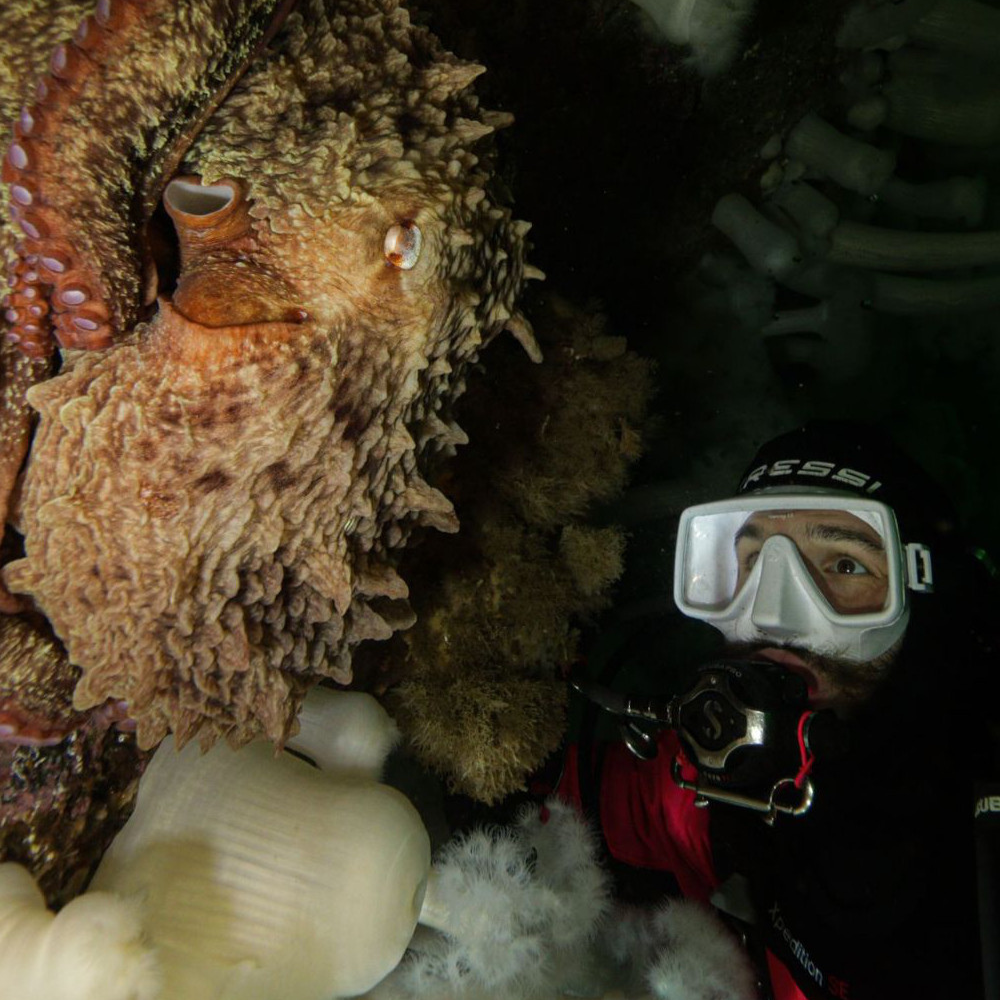
- Giant Pacific octopus (often more visible)
- Lingcod and rockfish
- Nudibranchs and macro life
- Plumose anemones fully extended
Many species are actually more active and easier to observe in winter due to cooler water and reduced diver pressure.
Essential Gear for Winter Diving in Vancouver
Proper equipment is the key to enjoying winter diving safely and comfortably.
1. Exposure Protection (Most Important)
Most winter divers in Vancouver use:
- Drysuits (strongly recommended)
- Proper thermal undergarments
- Thick hood and gloves
A well-fitted drysuit dramatically improves comfort, safety, and dive duration in winter.
Checkout our Drysuit 101 Youtube video
2. Cold-Water Regulators
Cold-water diving requires:
- Environmentally sealed regulators
- Proper regulator servicing
- Controlled breathing techniques
Cold water increases the risk of regulator free-flows, making cold-water-rated regulators essential for winter diving.
3. Weighting Adjustments
Thicker exposure protection means:
- More buoyancy
- Greater need for precise weighting
- Increased importance of buoyancy control
Many divers need to adjust their weighting for winter, especially when switching from wetsuit to drysuit diving.
Training Opportunities in Winter
Winter is one of the best times to take scuba courses in Vancouver. Popular winter courses include:
Training in winter also prepares you to dive confidently year-round, not just on vacations.
Is Winter Diving Safe in Vancouver?
Yes—winter diving in Vancouver is safe when done correctly.
Safety depends on:
- Proper training
- Appropriate equipment
- Conservative dive planning
- Awareness of weather and tides
Cold water reduces margins for error, which is why many instructors consider winter diving an excellent environment for building strong fundamentals.
Common Winter Diving Mistakes to Avoid
New winter divers often struggle due to:
- Inadequate thermal protection
- Being overweighted
- Rushing dive planning
- Skipping regulator servicing
Addressing these issues early turns winter diving from uncomfortable to extremely enjoyable.
Why Local Divers Love Winter Diving
Many Vancouver divers eventually prefer winter diving because:
- Conditions are predictable
- Dive sites are quieter
- Skills improve faster
- Comfort increases with proper gear
Once equipped and trained, winter becomes a favorite local diving season, not an obstacle.
Final Thoughts: Should You Dive in Vancouver This Winter?
If you are properly equipped and trained, winter is one of the best times to dive in Vancouver. Improved visibility, calmer sites, and ideal training conditions make it perfect for both new and experienced divers.
Whether you are considering your first cold-water dives, upgrading your gear, or enrolling in training, winter diving offers an opportunity to build confidence and skills that last all year.